New Year’s Resolutions for Cybercriminals

Spoiler: Your Business Is on Their List

Somewhere right now, a cybercriminal is setting New Year’s resolutions.

They’re not talking about balance or personal growth.
They’re reviewing what worked last year—and planning how to steal more this year.

And yes, small businesses are still their favorite target.

Not because you’re careless.
Because you’re busy.

And criminals love busy.

Here’s what they’re planning for 2026—and how to quietly, effectively ruin it.


Resolution #1: “I Will Send Phishing Emails That Don’t Look Fake Anymore”

The era of obvious scam emails is over.

AI now crafts messages that:

  • Sound completely normal
  • Match your company’s tone and vocabulary
  • Reference real vendors you actually use
  • Avoid obvious red flags

They don’t need typos anymore.
They need timing.

January is perfect—everyone is catching up, moving fast, clearing inboxes between meetings.

A modern phishing email looks like this:

Hi [your actual name],
I tried to send the updated invoice, but the file bounced back. Can you confirm this is still the correct email for accounting? Here’s the revised version.
Thanks,
[Name of your real vendor]

No drama. No urgency. No warning bells.

Just familiar enough to slip through.

Your counter-move:

  • Train your team to verify, not just read. Any request involving money or credentials gets confirmed through a separate channel.
  • Use email security that detects impersonation and domain spoofing—not just spam.
  • Create a culture where slowing down to verify is praised. “I checked first” should be a badge of professionalism, not paranoia.

Resolution #2: “I Will Impersonate Your Vendors… or Your Boss”

This one works because it feels real.

A vendor emails:

We’ve updated our bank details. Please use this account going forward.

Or finance gets a text from “the CEO”:

Urgent. Wire this now. I’m in meetings all day.

Sometimes it’s not even text.

Deepfake voice scams are rising fast. Criminals clone voices from podcasts, webinars, voicemail greetings. The call sounds exactly right. The request sounds reasonable.

That’s not futuristic.
That’s operational risk—today.

Your counter-move:

  • Enforce a callback policy for any payment or bank changes—using known contact details, never what’s in the message.
  • Require voice confirmation through established channels before funds move.
  • Protect every admin and finance account with MFA. One stolen password should never equal full access.

Resolution #3: “I Will Target Small Businesses Harder Than Ever”

Attackers used to chase large enterprises.

Then security improved. Insurance tightened. Big companies became slow, expensive targets.

So criminals adapted.

Why attempt one risky $5M breach when you can run a hundred $50K attacks that usually succeed?

Small businesses are now the primary focus.

You have money worth stealing.
You have data worth ransoming.
And you likely don’t have a full security team.

Attackers assume:

  • You’re stretched thin
  • You’re juggling operations, growth, and people
  • You believe you’re “too small to be worth it”

That assumption is their favorite opening.

Your counter-move:

  • Stop being low-hanging fruit. MFA, patching, and tested backups alone move you out of the easy category.
  • Retire the phrase “we’re too small to be a target.” You’re not too small—you’re just less prepared than larger organizations.
  • Work with a partner who focuses on resilience, not just reaction.

This is where Mirrored Storage comes in.

Our backup platform isn’t just storage—it’s business continuity. Immutable, offsite backups that are isolated from your production systems mean ransomware doesn’t get the final word. If attackers can’t erase your data, their leverage disappears.


Resolution #4: “I Will Exploit New Hires and Tax Season Chaos”

January brings new employees.

New employees want to help.
They want to impress.
They don’t yet know what “normal” looks like.

From an attacker’s perspective? Ideal.

Hi, I’m the CEO. Can you handle this quickly? I’m traveling.

Then tax season hits.

W-2 scams. Payroll phishing. Fake IRS requests.

A common play:

I need copies of all employee W-2s for a meeting with the accountant. Please send ASAP.

Once that data is gone, every employee is exposed—Social Security numbers, addresses, salaries. Fraudulent returns get filed before your people even submit theirs.

Your counter-move:

  • Include security training in onboarding—before new hires get full email access.
  • Document non-negotiable rules:
    • “We never send W-2s via email.”
    • “All payment requests are verified verbally.”
  • Reward verification. The pause is the protection.

Preventable Beats Recoverable. Every Time.

With cybersecurity, you always face the same choice.

Option A: React.
Pay the ransom. Hire emergency help. Notify customers. Rebuild systems. Repair trust.
Cost: six figures or more.
Outcome: Survival—with scars.

Option B: Prevent.
Harden access. Train people. Monitor continuously. Maintain clean, tested backups.
Cost: a fraction of Option A.
Outcome: Nothing happens—which is exactly the point.

You don’t install fire suppression after the building burns.

You install it so the fire never wins.

With Mirrored Storage, backups are:

  • Immutable (attackers can’t encrypt or delete them)
  • Offsite and isolated
  • Regularly tested—not just assumed to work

So if ransomware hits, recovery is a business decision—not a crisis negotiation.


How to Ruin a Cybercriminal’s Year

A strong IT and continuity strategy keeps you off the “easy target” list by:

  • Monitoring systems around the clock
  • Limiting access so one compromised account doesn’t cascade
  • Training teams on modern scams, not outdated examples
  • Enforcing verification policies for money and data
  • Maintaining backups that turn ransomware into a speed bump
  • Patching vulnerabilities before criminals exploit them

Prevention over panic.
Resilience over reaction.

Cybercriminals are optimistic about 2026. They’re counting on distraction, overload, and outdated defenses.

Let’s disappoint them.


Take Your Business Off Their Target List

Book a New Year Security Reality Check.

We’ll show you where you’re exposed, what matters most, and how solutions like Mirrored Storage’s immutable backup platform protect your business when prevention fails.

No scare tactics.
No jargon.
Just clarity—and a path forward.

[Book your 15-minute New Year Security Reality Check here]

Because the best New Year’s resolution is making sure your business isn’t on someone else’s list of goals.

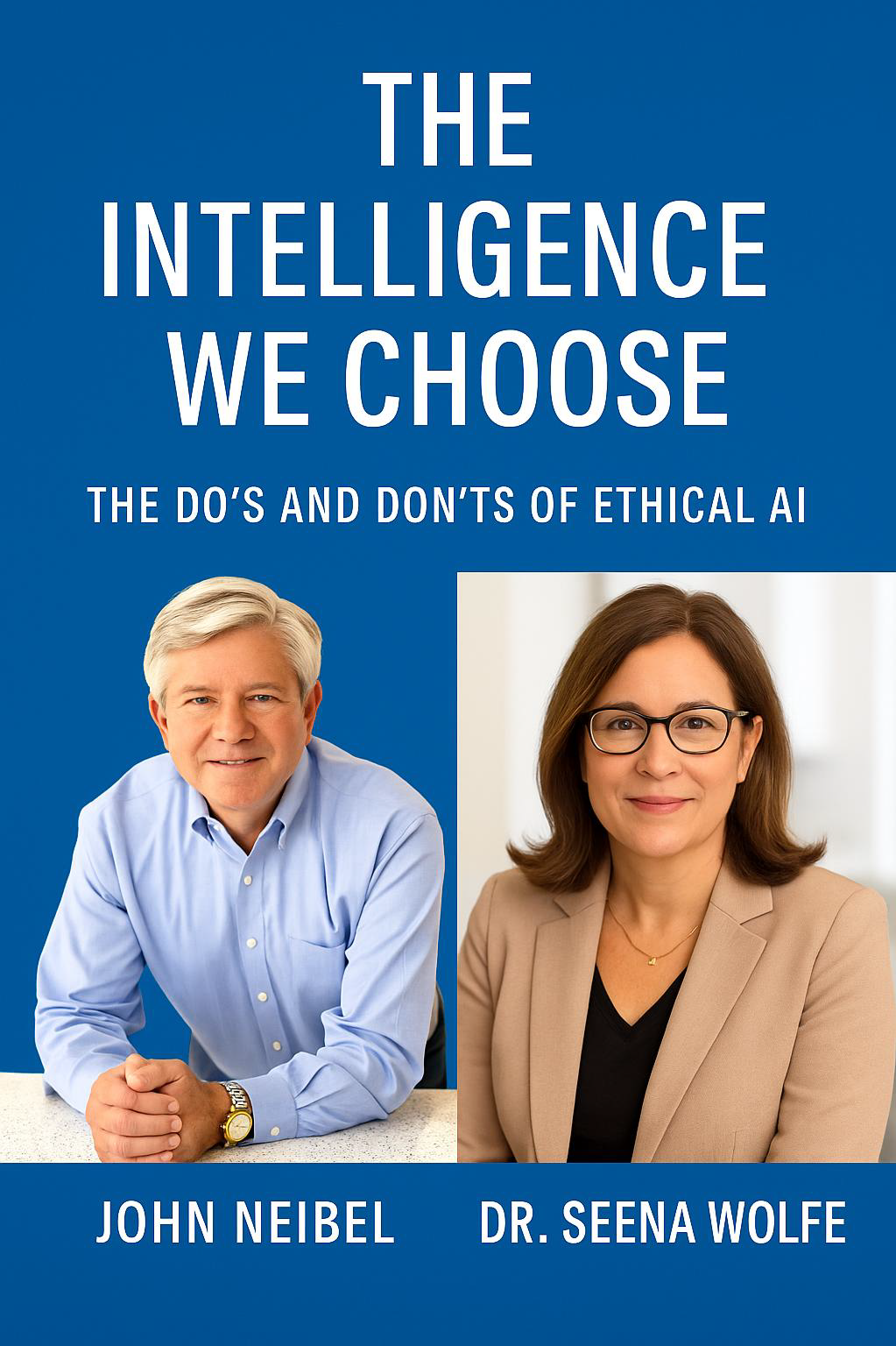
Book Published – Released TODAY

The Intelligence We Choose: Designing AI with Intention, Integrity, and Impact
By John Neibel & Dr. Seena Wolfe

We’re not just building artificial intelligence — we’re building systems that shape how humans live, decide, and relate. In a world obsessed with speed and scale, The Intelligence We Choose invites leaders, technologists, and changemakers to slow down — and build forward, not just fast.

From bias in data to the myth of neutrality, from hallucinating algorithms to human-centered design, this book explores what it truly means to build ethical, accountable AI in the real world. It’s not a technical manual. It’s a moral framework, a leadership toolset, and a cultural blueprint for anyone who wants to do more than innovate — they want to uplift.

Whether you’re deploying AI in healthcare, education, marketing, or public service — this book will challenge you to lead with clarity, courage, and conscience.

Because the most powerful thing we can automate isn’t intelligence — it’s intention.

Co-Managed IT Reality Check: When Your Tools Don’t Agree, Costs and Risk Add Up

Co-managed IT is supposed to make life easier.

Internal IT keeps control.
An MSP fills gaps, adds coverage, and provides scale.

But there’s a quiet problem we see over and over again — tool sprawl without clear ownership.

And yesterday’s work was a textbook example of how expensive that can become.


The Co-Managed Challenge No One Plans For

Most co-managed environments grow organically:

  • Internal IT selects tools over time
  • MSPs bring their own platforms
  • Legacy tools never fully get retired
  • Licenses renew automatically

Before long, you’re running:

  • Multiple monitoring agents
  • Overlapping security tools
  • Redundant asset inventories
  • Separate dashboards that don’t agree

Everyone assumes coverage.
The gaps live in between.


The Silent Questions Every IT Team Has

Here are the questions that quietly creep in:

  • Do we have tools installed that no one is sure who uses?
  • Are multiple tools doing the same job?
  • Are we paying for licenses tied to devices that no longer exist?
  • Which team actually owns each platform?

If those answers aren’t crystal clear, co-managed IT turns from strategic to reactive.


What We Did Differently

Instead of trusting any single system, we built a normalized inventory-matching process that forced alignment across tools.

That meant:

  • Normalizing company names
  • Normalizing machine names (case-insensitive, removing spaces, hyphens, underscores)
  • Matching devices across RMM, security, and backup platforms
  • Producing clean, deduplicated reports

Internal IT data and MSP data — reconciled into one source of truth.


What the Data Revealed

Once the noise was removed, the issues were obvious:

  • Devices with security tools installed — but no active monitoring
  • Systems in RMM that were missing backup or endpoint protection
  • Licenses assigned to machines that no longer existed
  • Overlapping tools performing the same function

None of these were malicious.
All of them were expensive.


Why This Hurts Co-Managed IT Specifically

In co-managed environments, assumptions are dangerous.

Internal IT assumes the MSP is covering it.
The MSP assumes internal IT owns it.

And that’s how:

  • Security gaps form
  • Costs creep up quietly
  • Audits get uncomfortable
  • IT teams lose confidence in their data

This isn’t a tooling problem.
It’s a visibility and ownership problem.


What This Actually Solved

By reconciling inventory, we delivered:

  • Clear ownership of each tool
  • Accurate visibility into real coverage
  • Immediate cost-reduction opportunities
  • Cleaner data for audits, renewals, and planning

Most importantly, it restored trust in the data — on both sides of the co-managed relationship.


The Bigger Takeaway

Co-managed IT works best when everyone sees the same truth.

If you’re not sure:

  • Who is using which tools
  • Where overlap exists
  • Or why licensing costs keep rising

That’s a signal — not a failure.

We can help.

Visibility turns co-managed IT from a reactive support model into a strategic advantage.

And it usually starts by reconciling the tools you already have.

The Ethical Responsibility of Leaders Deploying AI in SMB Environments

Artificial intelligence is no longer a future-facing experiment reserved for global enterprises. It has quietly entered small and mid-sized businesses through hiring tools, customer support systems, analytics platforms, and decision dashboards.

And with that quiet arrival comes a responsibility many leaders are not yet prepared to name.

The moment you introduce AI into your organization, you are no longer just adopting a tool. You are shaping how decisions get made, whose voices are amplified or ignored, and how risk is distributed across your people and customers.

That is an ethical act—whether you intended it or not.

AI Does Not Replace Leadership. It Reveals It.

One of the most persistent myths surrounding AI is neutrality: the idea that algorithms are objective, detached, and value-free. In reality, AI systems absorb the priorities, constraints, and assumptions of the environments they are deployed into.

In large enterprises, layers of governance may dilute this effect. In SMBs, it’s often the opposite.

When a small organization deploys AI:

  • Decisions happen faster
  • Fewer people question the output
  • Mistakes reach humans more directly

This means AI doesn’t just automate work—it inherits leadership values.

If speed is rewarded over care, the system learns that.
If cost-cutting outranks fairness, the system reflects it.
If no one is accountable, the system becomes quietly dangerous.

Delegation Is Not Abdication

Responsible leaders delegate tasks. Irresponsible systems encourage abdication.

AI can draft emails, screen resumes, forecast demand, or flag risk—but it cannot absorb moral responsibility. That always remains human.

Ethical leadership in AI deployment means:

  • Knowing where human judgment must remain present
  • Defining when AI output can be questioned or overridden
  • Resisting the temptation to treat “the system said so” as an answer

Human-in-the-loop isn’t a technical safeguard. It’s a leadership stance.

The Overlooked Risk: Dependency Without Resilience

Much of the AI ethics conversation focuses on bias—and rightly so. But in SMB environments, an equally dangerous risk often goes unnoticed: dependency without continuity.

When teams rely on AI systems they don’t fully understand, can’t audit, or can’t recover from, they create a single point of failure—cognitive, operational, and ethical.

What happens when:

  • The model is wrong?
  • The vendor changes terms?
  • The system goes offline?
  • The data is corrupted or lost?

Ethical AI leadership requires reversibility—the ability to pause, recover, and restore decision-making without panic. This is where continuity planning, secure backups, and mirrored systems stop being “IT concerns” and become moral ones.

Resilience is ethics expressed operationally.

Trust Is the Real ROI

Employees notice when AI is used on them rather than for them. Customers notice when automation replaces care. Partners notice when decisions become opaque.

Trust erodes quietly—and once lost, no system can optimize it back.

Leaders who approach AI ethically:

  • Communicate clearly about where and why AI is used
  • Invite questions instead of discouraging them
  • Treat transparency as a strength, not a liability

This builds something far more durable than efficiency: confidence.

Choosing Intelligence Is a Leadership Act

These ideas are explored more deeply in our forthcoming book, The Intelligence We Choose, being published this month. The book argues that intelligence is not just computational power or automation—it is the values we encode into our systems and the courage we bring to their use.

AI forces leaders to confront an uncomfortable truth: technology will not save us from responsibility. It will only amplify the choices we make.

For SMB leaders, this is not a disadvantage. It is an opportunity.

Smaller organizations can move with intention. They can embed ethics early. They can choose resilience over fragility, trust over speed, and judgment over blind automation.

The intelligence we choose today will define the organizations we become tomorrow.

And that choice still belongs to us.